Tuesday, 19 November 2013
A Further Explanation Part 1
Last's week post failed to elaborate fully on my belief that indeed "Something is rotten in the state of America". This post shall point out some of the worst faults of the American Republic to-day and perhaps what can be done to correct this.
As noted in the video below, the United States' income inequality is severe with the top one percent of Americans owning some forty percent of the wealth and roughly a quarter of its income. Yet this was not always the case in the United States-even in 1915 the top one percent earned only about 18 percent of the total income. In between, income inequality was even less, in the process known as the "Great Compression" with it being well under 10 percent from the 1950s through the 1970s. Yet since then, an opposite trend, known as the "Great Divergence" has occurred, reversing any gains made in reducing income inequality in the last century and there is little sign that anything besides recessions and slowdowns of the economy will end this. As a result, today, the United States is one of the most unequal countries in the world, exceeding that of virtually every other developed nation including the United Kingdom, Germany, France, and Japan and even developing countries in Latin America such as Venezuela. In relation to this, the United States also has one of the lowest rates of social mobility among developed countries. According to Timothy Noah's exhaustive analysis of the potential causes of income inequality, the biggest factor is that of education (especially for secondary schools) which has failed to keep up with changing times and also with other countries, making college education far more valuable to employers and inflating their wages.
In relation to this is the woeful state of our politics. One of the fundamental problems causing the current state of political deadlock is the way both Presidential and Congressional elections occur. While the Electoral College (with a few exceptions) generally follows the popular will in determining who becomes President, it is undemocratic in the sense that large areas of the country become marginalized when electing a President. As a result the Democratic leaning academics and college students of Austin, Texas or the GOP-leaning wealthy bourgeoisie that reside in coastal Newport Beach both end up casting votes for President that are worthless. At the same time, presidential candidates will essentially focus on a handful of states such as Ohio or Florida which effectively wield disproportionate power in presidential elections. The problems regarding Congressional elections can be separated to those in the Senate and the House. While other countries such as Canada or France have upper houses that look strong on paper and which are decided in a fairly undemocratic manner (such as Canada allocating them by province much as the US does by state), they usually defer to the will of the lower house. In the United States, on the other hand, the Senate has both de jure and de facto equal powers (with some exceptions in regards to treaties, Presidential appointments, and bills of revenue), when at the same time Senate seats are allocated disproportionately by state due to inequalities in state populations. Thus California has one Senator for over 18 million people while Wyoming has one Senator for roughly quarter of a million people. This, along with procedural rules regarding the filibuster, has led to a small minority of Senators representing a small minority of Americans to block or at least delay many pieces of legislation. While the House of Representatives is supposedly more democratic in character, it suffers from having its boundary lines drawn in most cases by partisan state legislatures (with some notable exceptions such as California) who draw boundaries designed to maximize the advantage for their party. As a result, the Republicans have a 12 to 4 advantage of House seats from Ohio, a 9 to 5 advantage in Michigan, and a 12 to 5 advantage in Pennsylvania despite all of them being states which President Obama won last year in the Presidential election. This factor along with variations in the concentrations of voter populations, indeed, led to the Republicans retaining a majority in the House despite the Democratic candidates receiving more votes. Finally the number of House seats has been set at 435 for about a century now, which means that each House member represents an average of 710,767 people. By way of comparison, the United Kingdom which has only a fifth of the population of the American Republican has some 650 seats in its House of Commons.
Needless to say, these are not all of America's problems. One must also discuss the state of our health care system, the lack of advanced infrastructure in both energy and transportation (such as high speed rail or nuclear power), the phenomenon of white flight, problems with our education system, and cultural degeneration. These problems and solutions to them will be discussed in future posts of this series to be entitled "There is Something Rotten...".
Tuesday, 12 November 2013
Tuesday, 5 November 2013
Modest Proposal-An Update
It is one of the more mysterious things about humanity, that oftentimes that two different individuals or groups of individuals arrive at the same idea independently. This occurred in the development of the theory of evolution by natural selection by both Darwin and Wallace and in the development of calculus which both Newton and Liebnitz stumbled upon.
This seems to have occurred in my case, when I was informed that my proposed system of people dropping in and picking up books for free already existed in many coffee shops including locally:
Regardless, I plan to go ahead with this project of mine, having been approved by my instructor, who has even most generously given me offers of aid. If readers have any further ideas, I ask that you comment to share them.
Labels:
Book Exchange,
Books,
Culture,
Innovation,
Literature,
School,
What If
Tuesday, 29 October 2013
Book Notes: Jude the Obscure
I've started Thomas Hardy's Jude the Obscure, which was a classic of 19th Century realism. The novel appears to be tragic going by the descriptions on the cover, but the beginning is rather similar to Dickens's Great Expectations, involving young boys in the English countryside (Jude in this case and Pip in Dickens's novel) yearning for a better opportunity. However, most fortunately, there is little of Dickens's forced humour in this book and instead opens promisingly with a melancholic departure of a beloved schoolmaster from Jude's village. In addition I am especially eager to read this because as a work of realism, it will provide a vivid portrait of English life during Queen Victoria's reign. I hope for the best from Mr. Hardy's pen.
Tuesday, 22 October 2013
A Modest Proposal
As most readers will realize, this blog was set up as part of an assignment in my English class although I've always intended to get into blogging. Also as part of my English class, I have to do an innovation project which as seen in last week's post starts with asking the question "What If?'. So I intend to pose my "what-if" question to-day and elaborate on it further to encourage others to do something similar.
The "what if" question I posed for my innovation project was "what if students could obtain free used books for their classes or for general knowledge and enlightenment?". As a result I have come up with the idea of a book exchange at my school. The basic premise of such an exchange would be that used books would be donated by an individual or a library and then people could pick up the books they wish to possess either for free or for a small fee (most used library book stores I've seen charge books at no more than one or two dollars and sometimes far less). Many of the books that would be donated would be books assigned by a class or on a reading list so that students would have a copy of their own that they could write in and so forth without having to purchase it at a relatively high price at a bookstore or waiting for weeks for a shipment to arrive. But, just like the library, there'd be other books to educate or entertain students independently of a teacher's direction.
I hope others will be inspired to follow this area and set up book exchanges at their own school libraries with it being extended to textbooks in colleges. This can even be implemented in workplaces and places of worship to promote life-long learning. Perhaps this may indeed do the same for books what the health insurance exchanges set up by the Affordable Care Act is doing.
Labels:
Book Exchange,
Books,
Culture,
Innovation,
Literature,
School,
What If
Tuesday, 15 October 2013
Two Men Who Asked "What If?"
Asking the question "what if?" is part of what makes us human as it shows us imagining something that does exist not yet and then use our creative powers to answer it ourselves. To-day I'd like to show two men who asked this question and thus show how fruitful the answers to this question can be.
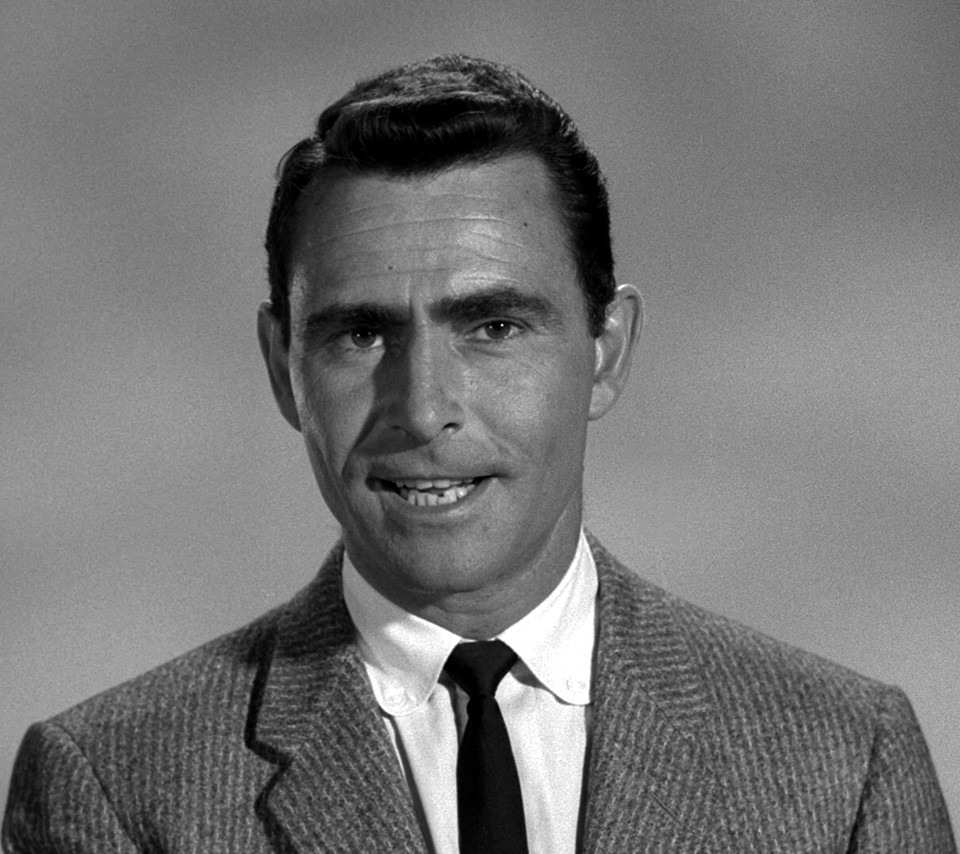
The first of these men is Rod Serling who created the television show Twilight Zone. It asks "What if...?" and then dramatically depicts Mr. Serling's often clever answer to that question. I've begun watching the series lately (having already seen many episodes in school classes), and my favourite of the ones I've seen so far asks the question "What if one could delay death?" in the episode "One For the Angels":
The second man who asked "What if?" is Japanese anime and manga artist Leiji Matsumoto. One of his most famous series, Galaxy Express 999 about an orphaned boy named Tetsuro who travels across the Galaxy with a mysterious woman named Maetel in order to fulfill his mother's dying wish then he gain a cyborg body, asks two major "What if" questions: "What if there was a an express train that travelled through the stars of space?" and "What if humans could gain cyborg bodies that greatly lengthened their lives?". In each individual episode of the series, Matsumoto asks a "What if?" question such as "What if there was a planet where some people glowed in the dark like fireflies?" and explores its potential consequences. Incidentally the entire series can be legally watched with English subtitles on Crunchyroll.com.
Tuesday, 8 October 2013
President Othello?
There are certain occasions when eerie parallels arise between literature and real life which are obvious to all. Such a similarity may be observed between Shakespeare's Othello and the current situation in American politics. Much as the Venetians in the play had a man of African descent as a general (while clearly from some area of North Africa, it is unclear whether Othello was intended to be black or simply a darker-skinned Arab), the United States now has for the first time in its history a man of African descent as its President. In addition, much as there was a malignant man determined to bring down the noble Othello in the story, so there is an entire faction of men and women in this country determined to do the same with President Obama. This faction in question, of course, is the Tea Party wing of the Republican Party especially in the House of Representatives, which in its latest act of fanaticism to stop or at least retard a modest and conservative healthcare reform plan has shut down countless government functions including among other things the virtual entirety of NASA and various government databases that provide all sorts of useful information. Meanwhile these Congressmen have blocked a "clean funding" bill that would resume funding for the government from coming to a vote without having to accept extortion due to the spinelessness of Speaker Boehner and the fear most House Republicans have of being primaried. On top of that, the Tea Party members of the House may even prevent a debt ceiling increase in the middle of this month in order to extort defunding of or delays in the implementation of Affordable Care Act despite the massive potential economic disaster such as an action would entail.
Similarly to how Iago incited Brabantio and Roderigo through references to the "Barbary horse", the Tea
Party has in many (though to their credit, not most) cases appealed to racial and religious xenophobia to discredit the President in the eyes of the citizenry by stating he was born in Kenya or even a secret Muslim acting as a Manchurian candidate to subvert the country. Of course there are differences, such as the fact that while the motives behind Iago's actions are unclear and disputed by literary scholars, the motive of the Tea Party is clear: to enact the dogma of a reactionary ideology that aims to restore a laissez-faire capitalist paradise that never existed in the United States and as a result to dismantle the legislation of the New Deal and the Great Society such as Social Security and Medicare. Another difference is that while Iago's scheming was subtle and secretive, the Tea Party's actions are out in the open and obvious to the eyes of the world. Let us hope this clarity on the part of the Tea Party leads to popular backlash that will force Speaker Boehner to let democracy take its course by allowing a vote in the House for the clean funding bill and averting catastrophe by passing a debt ceiling increase (or better yet abolishing it completely). Furthermore, let us hope even beyond these immediate problems, the Tea Party members in the House along with their comrades in the Senate and state governments will be voted out in 2014 to completely remove this malign force that has poisoned political rhetoric and caused tremendous suffering to a struggling nation attempting to move out of an economic crisis.
Subscribe to:
Posts (Atom)